Buying baby bottles before your baby arrives can feel like guesswork. A small set may mean frequent washing, while a large set could go unused if your baby prefers a different nipple.
How many baby bottles do you need? Start with your expected bottle feeds and how quickly clean, dry bottles will be available again. Feeding method helps you estimate, but your daily routine determines the number you will actually use.
How Many Baby Bottles Do I Need? Quick Answer
For one baby, 2–3 bottles may be enough for occasional bottle feeds, 4–6 can suit combo feeding, and 8–10 can be a useful starting point for exclusive bottle feeding. Families with frequent feeds or a longer washing and drying cycle may need more.
These are practical shopping estimates, not medical requirements.
| Feeding situation | Recommended starting number | When you may need more |
|---|---|---|
| Mainly breastfeeding, with occasional bottles | 2–3 | Add bottles for regular caregiver feeds or daycare |
| Combo feeding | 4–6 | Adjust to the actual number of bottle feeds |
| Exclusive bottle feeding | Start with 4–6, then increase to 8–10 | More may be needed if clean, dry bottles are not ready before the supply runs out |
Before buying a large matching set, try a small selection to find a bottle and nipple your baby accepts. Once feeding is established, build a rotation that fits your routine.
How to Calculate the Right Number for Your Routine?
Use this simple estimate:
Bottles needed = bottle feeds before cleaned bottles are ready to use again + 1–2 spare bottles
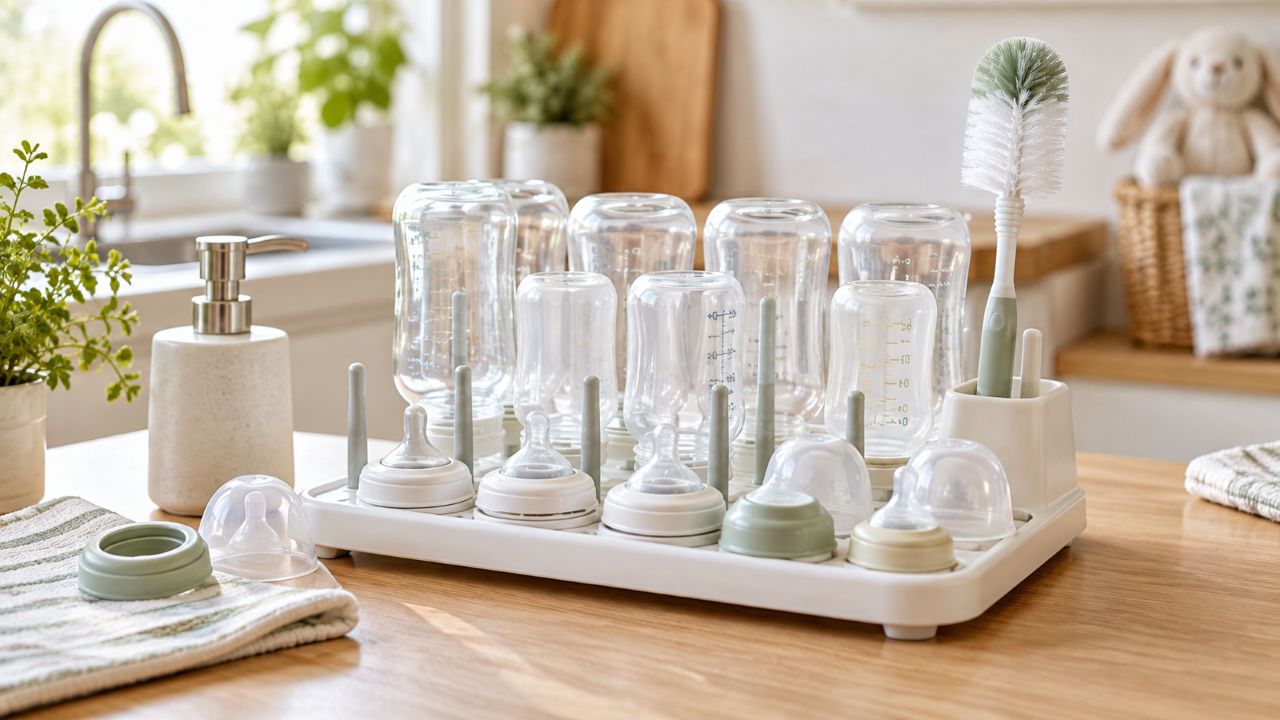
Count complete bottles, including nipples, rings and any valves. Extra bottle bodies will not help if all the compatible nipples are still being cleaned or dried.
For example:
| Your routine | Example bottle supply, including spares |
|---|---|
| One or two occasional bottle feeds | 2–3 bottles, with cleaning between uses as needed |
| Four bottle feeds before cleaned bottles are available again | 5–6 bottles |
| Eight bottle feeds before cleaned bottles are available again | 9–10 bottles |
| Twelve bottle feeds before cleaned bottles are available again | 13–14 bottles |
The spare bottles are already included in these totals; you do not need to add them again.
The CDC recommends cleaning baby bottles after every feeding. Do not refill a used bottle after simply rinsing it. Allow cleaned parts to air-dry thoroughly before storing them.
For cleaning methods and when sanitizing is needed, see our guide to cleaning and sterilizing baby bottles.
How Many Bottles Will I Need for a Newborn?
The CDC notes that most formula-fed newborns feed 8–12 times in 24 hours. That does not automatically mean you must own 12 bottles: the same bottle can be used again after proper cleaning and drying.
For exclusive bottle feeding, 4–6 bottles can serve as an initial trial supply, provided you can clean and dry them frequently. Once you know which bottle works, consider building toward 8–10 and adjust from there.
If your newborn takes 12 bottle feeds before cleaned bottles become available again, 8–10 will not cover that entire period. Use the calculation above rather than treating any suggested range as a fixed limit.
How Many Bottles Do You Need by Feeding Method?
The important distinction is how often your baby drinks from a bottle. Expressed breast milk and formula both require a clean bottle for each feed.
How Many Baby Bottles Do I Need If Breastfeeding?
If you mainly nurse and offer an occasional bottle, 2–3 bottles are a reasonable starting point.
Regular pumping or returning to work changes the calculation. Count the bottles needed for caregiver feeds, then consider whether any additional compatible containers will be occupied by pumping or milk storage.
If you are preparing for the first bottle feed, see our guide to introducing a bottle to a breastfed baby.
How Many Baby Bottles Do I Need If Combo Feeding?
4–6 bottles can be a useful starting supply for combo feeding. However, one daily formula feed creates a different routine from alternating breast and bottle throughout the day.
Count the feeds given by bottle, whether they contain expressed milk or formula, and adjust your supply to match.
How Many Bottles for Exclusive Bottle Feeding?
For exclusive bottle feeding, 8–10 bottles can provide a useful rotation once your baby accepts the design. A smaller supply may work with frequent cleaning and drying; a larger supply may help when more bottles are in use or unavailable.
Exclusive pumping families should also account for containers used to collect or store milk. A bottle holding expressed milk in the refrigerator is not available for the next feed.
How Does the Bottle Need Change as Your Baby Grows?
Age can help you review your setup, but it does not determine how many bottles to buy. If you are wondering how many baby bottles you need for a 3-month-old or 6-month-old, check your baby’s current bottle feeds before purchasing more.
| Baby’s age | What to review |
|---|---|
| Newborn to 3 months | Frequent feeds and whether your initial supply covers cleaning and drying time |
| Around 3–6 months | Changes in feeding frequency, bottle capacity and caregiver arrangements |
| Around 6–12 months | Actual bottle use as solids and cup practice become part of the routine |
| Around 12 months | Whether you need replacement bottles or are gradually moving toward cups |
Starting solids does not automatically mean fewer milk feeds. Breast milk and/or infant formula remains the main source of nutrition from 6 to 12 months.
You also do not need to replace every bottle with a larger one at the same time. Keep smaller bottles that still suit your baby’s feeds and add larger sizes only when useful.
FAQ
How Many Baby Bottles Do I Need and What Size?
Choose the number using your bottle-feeding and cleaning routine, then select capacity separately. You do not need to buy a complete set in every size.
Four- or five-ounce bottles can suit smaller feeds, while eight- or nine-ounce bottles provide room for larger feeds. A larger bottle can also hold a smaller amount, so starting with small bottles is optional.
Do Babies Need 4 or 8 oz Bottles?
Either capacity may work, depending on the amount offered and the bottle design. Bottle capacity does not determine nipple flow, and moving to an eight-ounce bottle does not automatically mean your baby needs a faster nipple.
See our guide to baby bottle nipple sizes and flow rates for signs that a flow adjustment may be needed.
How Many Baby Bottles Do I Need for Twins?
Calculate each baby’s bottle feeds before cleaned bottles are available again, add the two totals, then include a small reserve.
For example, if each baby uses six bottles during that period, 12 bottles cover the feeds; adding two spares gives you 14 in total. This is a planning example, not a fixed recommendation for all twins.
Try a smaller selection before buying in bulk, as the babies may prefer different nipples.
How Many Bottles Should I Send to Daycare?
Ask your daycare about its feeding, labeling and spare-bottle requirements. Base the number on the bottle feeds your baby usually takes during those hours.
If your baby typically takes three bottles while away, three prepared feeds plus an agreed spare may suit the arrangement. You may also want clean bottles available at home so the next feed does not depend on immediately washing everything returned from daycare.