Choosing the right baby bottle is not always easy because every baby feeds differently. A bottle that works well for a newborn may not suit a breastfed baby, while a more advanced venting system may improve airflow but add extra cleaning steps.
Whether you are a first-time parent choosing bottles for daily feeding or a wholesaler researching products for your market, this guide explains what makes a well-designed bottle, which feeding needs each option suits and what trade-offs to expect. We compare six established retail bottle systems, then introduce OYABABIES separately as a manufacturing partner for wholesale, OEM, ODM and private-label projects.
Best Baby Bottles at a Glance
| Brand or Bottle | Best For | Material | Venting | Main Trade-Off |
|---|---|---|---|---|
| Philips Avent Natural Response | Combination feeding | Plastic and glass | Nipple vent | Some babies need time to adapt |
| Dr. Brown’s Options+ | Gas and airflow management | Plastic and glass | Internal vent | More parts to clean |
| Comotomo Baby Bottle | Soft bottle for breastfed babies | Silicone | Dual nipple vents | Flexible body can tip |
| Evenflo Balance+ Wide Glass | Glass bottle | Glass | Integrated nipple vent | Heavier and breakable |
| MAM Easy Start Anti-Colic | Newborns and travel | Plastic | Vented base | Base requires correct assembly |
| Lansinoh NaturalWave | Occasional expressed-milk feeds | Plastic and glass options | Nipple vent | Acceptance varies by baby |
How We Compared These Baby Bottle Brands?
We reviewed publicly available product specifications from each manufacturer. The comparison focuses on nipple flow and shape, venting design, bottle material, number of components and ease of cleaning. We did not conduct hands-on or laboratory testing, so the categories below should be treated as practical starting points rather than universal rankings. Product specifications may change, and bottle acceptance can vary because every baby has different feeding skills and preferences.
Philips Avent Natural Response: Best for Combination Feeding
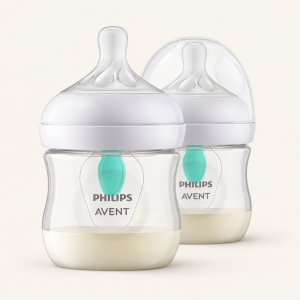
The Natural Response nipple releases milk when the baby actively drinks, allowing pauses between sucking and swallowing. Its wide shape and controlled flow make it one of the best bottles for combination feeding.
The system has fewer parts than bottles with internal vent tubes and is available in plastic and glass. However, babies accustomed to freely dripping nipples may need time to adapt, and choosing the correct flow can require trial and observation.
Dr. Brown’s Options+: Best for Air Management
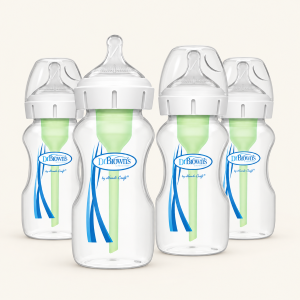
Dr. Brown’s Options+ uses a removable internal vent to create a separate airflow route and reduce vacuum buildup. Among the best anti-colic bottles, it is a practical option for babies who frequently swallow air or experience interrupted milk flow.
The system offers multiple sizes and nipple flows, but its small vent components require careful washing and correct assembly. No bottle can guarantee relief from colic because crying and discomfort have several possible causes.
Learn more in our anti-colic baby bottle guide.
Comotomo: Best Soft Bottle for Breastfed Babies
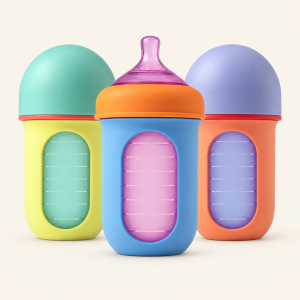
Comotomo combines a soft silicone body, broad nipple base, dual nipple vents and extra-wide opening. These features make it a popular option among the best bottles for breastfed babies, particularly when a baby rejects a firmer bottle.
The wide opening simplifies handwashing, but the flexible body is less stable when placed upright and the markings may be difficult to read. Silicone also generally costs more than standard PP.
Evenflo Balance+ Wide Glass: Best Simple Glass Bottle
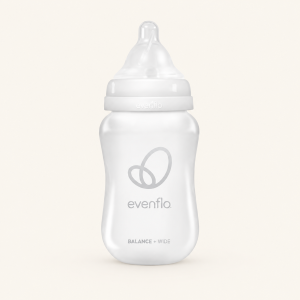
Evenflo Balance+ Wide combines a glass body, gradually sloped nipple and integrated vent. It is one of the best glass baby bottles for families wanting fewer loose vent components.
Glass does not readily retain odors or become cloudy and works well for repeated warming. Its disadvantages are weight and breakage risk. A silicone sleeve can improve grip but does not make glass unbreakable.
Compare the trade-offs in our glass vs plastic baby bottles guide.
MAM Easy Start Anti-Colic: Best for Travel
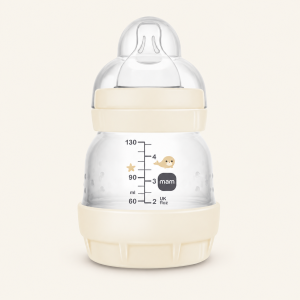
MAM Easy Start uses a vented base rather than an internal tube. Compatible models can also be assembled for microwave steam sterilizing according to the manufacturer’s instructions.
This makes the bottle convenient for travel, but the base contains several pieces and must be assembled correctly. Its flat nipple shape may suit some babies but not others.
Lansinoh NaturalWave: Best for Occasional Bottles
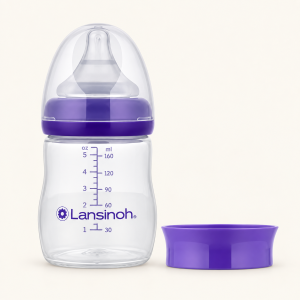
Lansinoh’s NaturalWave nipple has a gradual slope and flexible tip designed for breastfed babies. The bottle has a relatively simple assembly and slow-flow options, making it useful for occasional expressed-milk feeds.
A “breast-like” nipple does not guarantee bottle acceptance, and available materials or pack sizes vary by market.
How to Choose the Best Baby Bottle Brand
The best baby bottle brand is the one that matches your baby’s feeding ability and your daily routine. Compare the complete bottle system rather than choosing by brand popularity alone.
Match the Nipple Flow
Nipple flow labels are not standardized across brands. A “slow-flow” nipple from one brand may release milk faster than a similar label from another.
Watch how your baby feeds. Coughing, sputtering or milk leaking from the mouth may indicate that the flow is too fast. Forceful sucking, nipple collapse or repeated frustration may mean that the flow is too slow or the vent is blocked. Our baby bottle nipple size guide explains these signs in more detail.
Compare Venting Systems
| Vent Type | Advantage | Trade-Off |
|---|---|---|
| Nipple vent | Fewer parts | Less dedicated airflow control |
| Internal vent | Strong pressure management | More parts to clean |
| Bottom vent | Keeps air entry away from the nipple | Base requires correct assembly |
Choose the Right Material
Glass handles repeated heating well and resists odors, but it is heavier and breakable. PP is lightweight and economical. PPSU combines low weight with better heat resistance, while silicone is soft and shatter-resistant but generally more expensive.
Check Cleaning and Compatibility
Count the bottle parts and check whether small vents require a special brush. Replacement nipples should be easy to find in suitable flow stages. Also confirm whether larger bottle capacities are available and whether the system connects to your breast pump or other feeding accessories.
Buy one or two bottles first. Once your baby accepts the nipple and the bottle is practical to clean, add more for home, daycare or travel.
Want to Start Your Own Baby Bottle Brand?
The six brands above show how bottle systems build a clear market position around different feeding needs. Some focus on combination feeding, while others compete through airflow control, bottle material or cleaning convenience.
For wholesalers, distributors and retailers planning to launch their own baby bottle brand, the next step is turning these product insights into a coordinated range for their target market.
Why Work with OYABABIES?
Established in 2001, OYABABIES is a baby bottle manufacturer specializing in wholesale, OEM, ODM and private-label production. The company offers more than 100 feeding bottle models made from PP, PPSU, Tritan, glass, silicone and stainless steel. Available designs include standard, wide and extra-wide neck bottles, smaller newborn capacities, larger bottles for older babies, anti-colic bottles, handled bottles and feeding sets.
Molding, assembly and packaging are completed within the factory, giving buyers clearer control over product specifications, samples, production schedules and final inspection. OYABABIES has supplied baby products to customers in more than 60 countries and can support export packaging and documentation for different markets.
What Can Be Customized?
Buyers developing OEM baby bottles, custom baby bottles or private-label baby bottles can discuss:
- product colors and brand logos;
- bottle materials and capacities;
- nipple shapes and flow stages;
- regular or anti-colic venting designs;
- custom molds and product structures;
- retail packaging and instructions;
- coordinated bottle, nipple and accessory sets.
Customization options depend on the selected model, order quantity and target-market requirements.
What Should Buyers Confirm Before Ordering?
Before requesting samples or placing a bulk order, confirm:
- the target market and applicable testing standards;
- minimum order quantity;
- sample availability and sample costs;
- packaging and labeling requirements;
- production lead time;export documentation and shipping terms.
Confirming these details early can reduce compliance issues, packaging revisions and production delays.
Explore OYABABIES baby feeding bottles or contact the team to discuss samples, customization and wholesale requirements.
FAQ
What Is the Best Feeding Bottle for a Newborn?
A suitable newborn bottle usually has a smaller 4–5 oz or approximately 120–160 ml capacity, a slow-flow nipple and a vent that is easy to clean. Choose the flow according to the baby’s feeding behavior rather than relying only on the age printed on the package.
What Are the Best Bottles for Preemies?
Premature babies may need an extra-slow nipple to coordinate sucking, swallowing and breathing. Because flow labels differ between brands, choose the bottle and feeding plan with the neonatal team, pediatrician or feeding specialist. Do not enlarge the nipple hole or increase the flow without professional guidance.
What Are the Best Bottles for Acid Reflux?
No bottle treats the cause of infant reflux. Look for a controlled flow, reliable venting and clear volume markings to help avoid overfeeding. The U.S. National Library of Medicine recommends avoiding overfeeding, burping regularly and holding babies upright after feeds. Seek medical advice for forceful vomiting, feeding refusal, breathing or swallowing problems, or poor weight gain.
How Do You Choose Safe, Non-Toxic Baby Bottles?
Choose bottles made from appropriate food-contact materials and follow the manufacturer’s heating, sterilizing and dishwasher instructions. Replace scratched or cracked plastic bottles and chipped or fractured glass bottles.
Are Glass Baby Bottles Safer Than Plastic?
Glass avoids plastic contact, resists odors and handles repeated heating well, but it is heavier and breakable. A properly manufactured plastic bottle can also be safe when used, cleaned and replaced according to the manufacturer’s instructions.